
The real oil… our early motoring entrepreneurs
Words: Carolyn Enting
Photography: John Andrew Ford archives
It's hard to imagine, when driving in and around the Uptown Precinct, that the first traffic lights in Auckland were only installed on the corner of Symonds Street and Khyber Pass in 1931.
They were quite different to the lights seen today, says Auckland vintage car enthusiast and author Barry Birchall.
"There was a semaphore that moved up and down to the accompaniment of bells, and green and red lights that flashed. Three traffic officers were stationed under the lights with pointers for a week to make sure motorists knew what they had to do. They were often referred to in the newspapers at the time as traffic robots."
The traffic lights attracted scores of people who lined the kerb to watch the new signals. The first trial was watched by the Mayor George William Hutchison, city councillors and Transport Board members.
Birchall's deep dive on motoring history in Tamaki Makaurau is documented in his book The Early Years of the Motor Vehicle in Auckland (2021). It covers a remarkable period during which the motor vehicle changed how Aucklanders got around, and established a whole new industry.
The introduction of motor vehicles caused quite the kerfuffle when they began sharing the clay roads with the horse and cart.
The speed limit was set at 8 mph, which was fine for a horse but too slow for a vehicle. By 1910, it had been increased to 10 mph, and to 18 mph in 1914. However, almost every borough had set different speeds, and with over 30 boroughs in Auckland, it was hard for motorists to follow the limits.
Most vehicles were purchased by the richer folk, including founder of the AAA (rebranded as AA in 1938) Dr George de Clive- Lowe, who in 1903 "convened a meeting at his home in Symonds Street to which anybody who owned a motorcar was invited".
"Drivers of those early cars were regarded with suspicion, even hostility, by horse owners and local authorities as the new motor car could frighten a horse. Motoring was also seen as a sport for the wealthy, and road rules at the time had been developed by the Councils with the needs of horses and people on foot in mind," says Birchall. "Motorists felt obliged to bind themselves together into a united body of self-defence."
The former Universal Motors Ltd building on the corner of Upper Symonds Street and Glenside Crescent (132 Symonds Street, now home to many business including Southbound Records and Hard to Find Books) is an impressive reminder of days gone by.
It was purpose-built in the early 1920s by the Colonial Motor Company, which took over the management of Ford dealer The Universal Motor Co on Chancery Street.
"At the time, it was regarded as an iconic building, attracting the attention of Ford people around the world. They claimed it was the second-largest show room in the world," says Birchall.
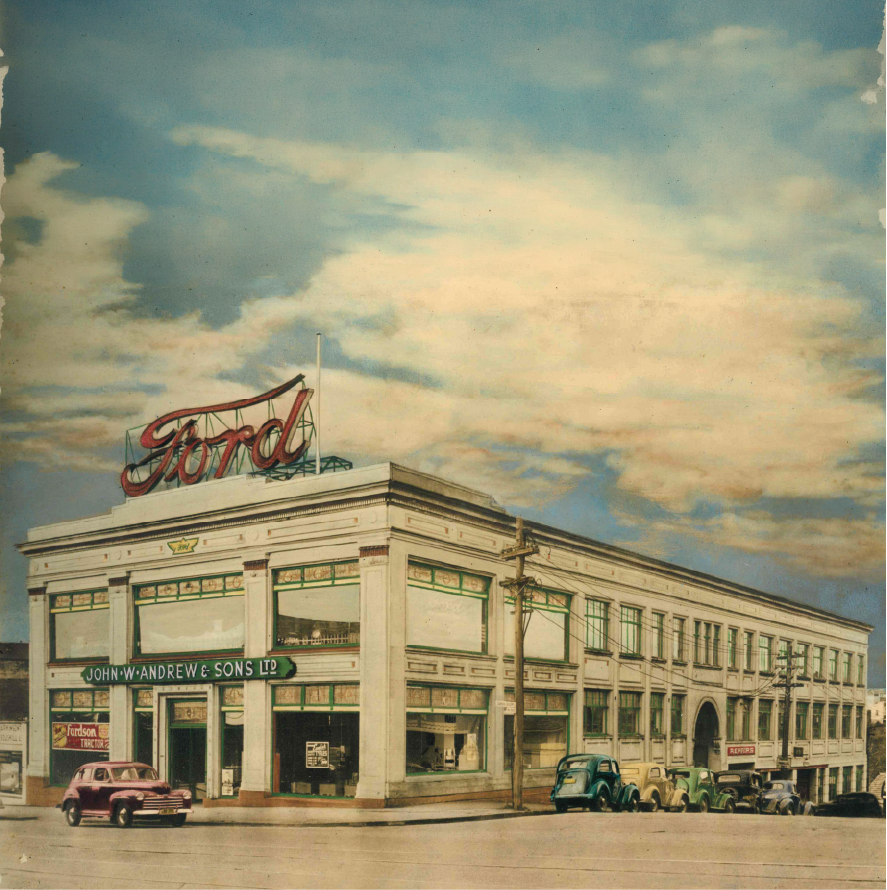
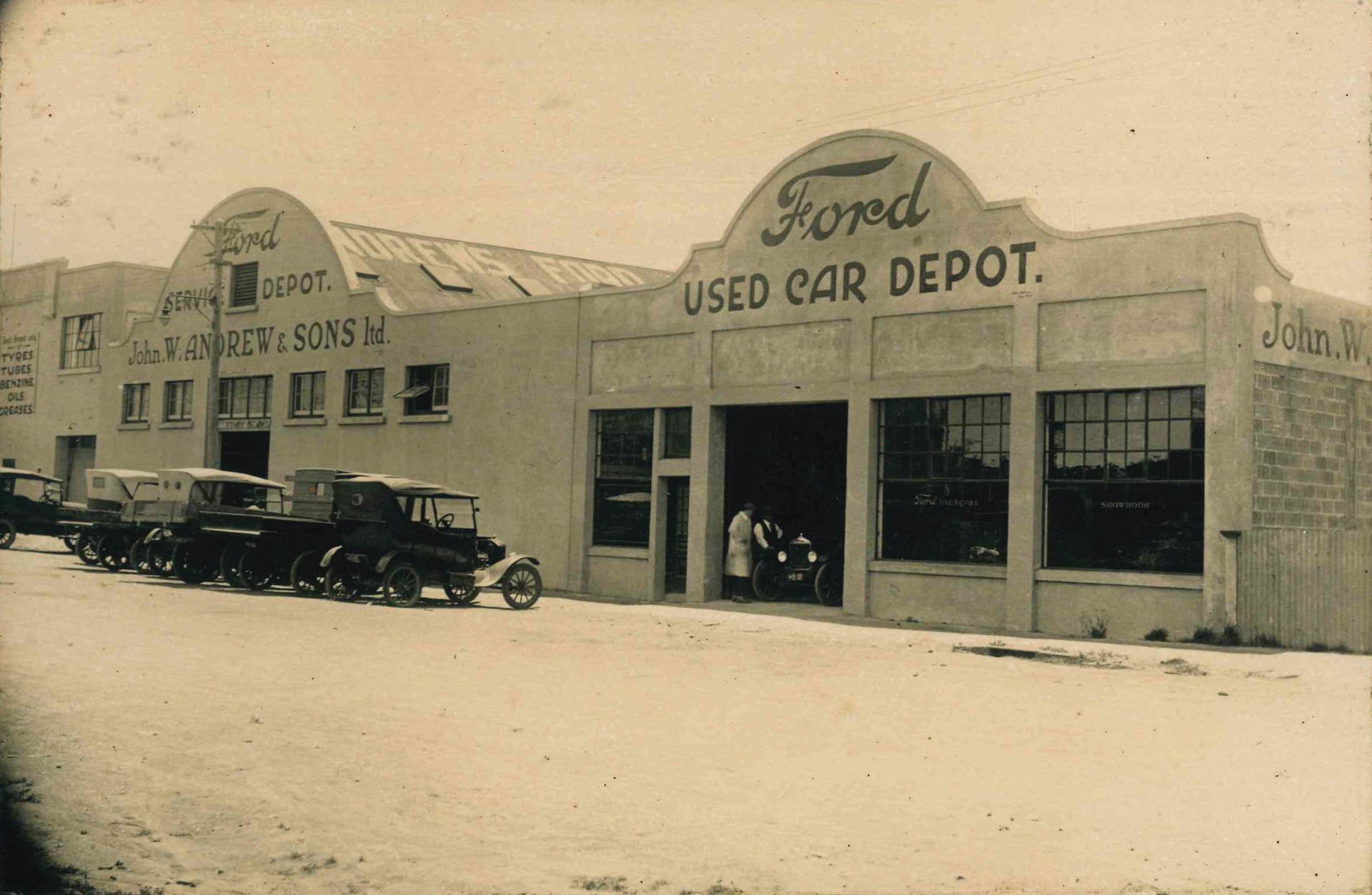
Universal didn't move into the new building until September 1926, and, when supply of new Ford vehicles stopped in June 1927, it was decided to amalgamate the business with John W Andrew. In May 1927, Ford closed all its factories to retool for a new model, which caused problems for dealers.
"They decided it was better to unite and stand than continue competing, and so the two dealerships were amalgamated," says Birchall.
John Andrew had purchased a Model T Ford as a taxi in 1912 and was so impressed with the vehicle that he began selling them from his first premises on the corner of Porters Avenue and Eden Terrace. In addition to Ford, he sold Chase trucks. He didn't become an official Ford dealer until 1917.
Between 1916 and July 1926, John W Andrew sold 2,623 new cars and 683 second-hand Ford cars, more than any other Ford dealer in New Zealand or Australia. He reportedly said if any dealer sold more cars, he'd donate £100 to the new museum in the Domain.
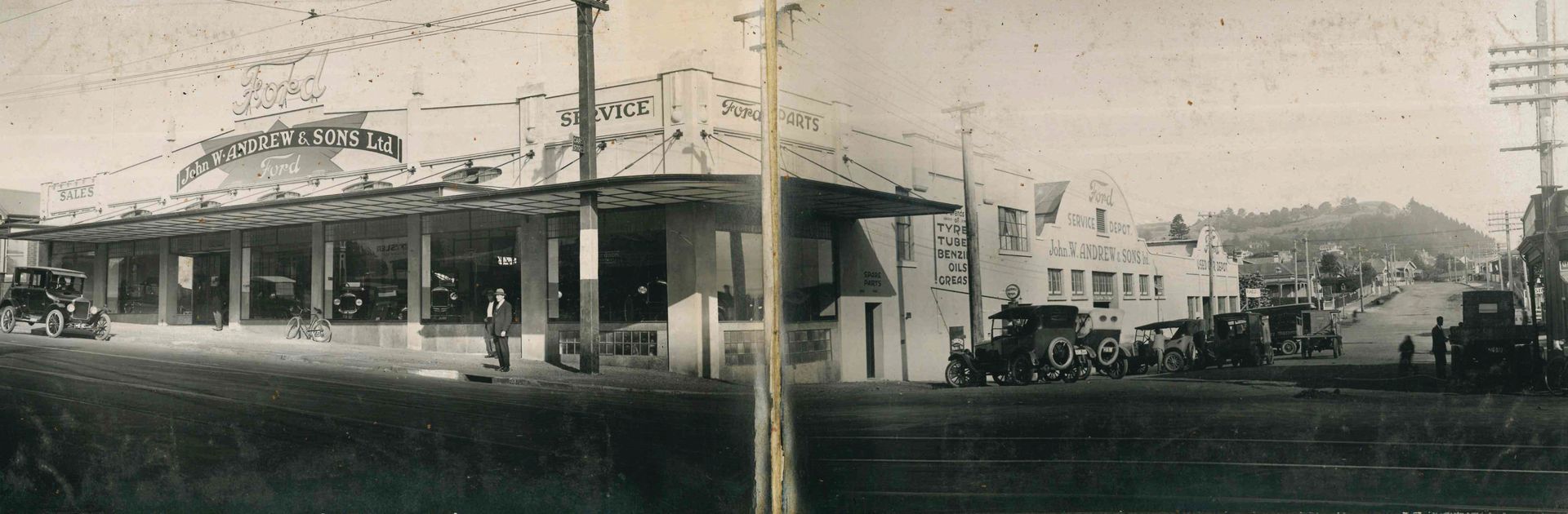
JW Andrew & Sons moved into a new building on the corner of Porters Avenue and New North Road in 1925. At that time, it was the largest car showroom in the city and had flood lighting, heating and three telephone lines. "It was built in the Spanish mission style and a far cry from the old stables where he sold his first Model T Ford," says Birchall.
John Andrew's daughter Mary would provide free tuition for any buyer who had never driven a car before.
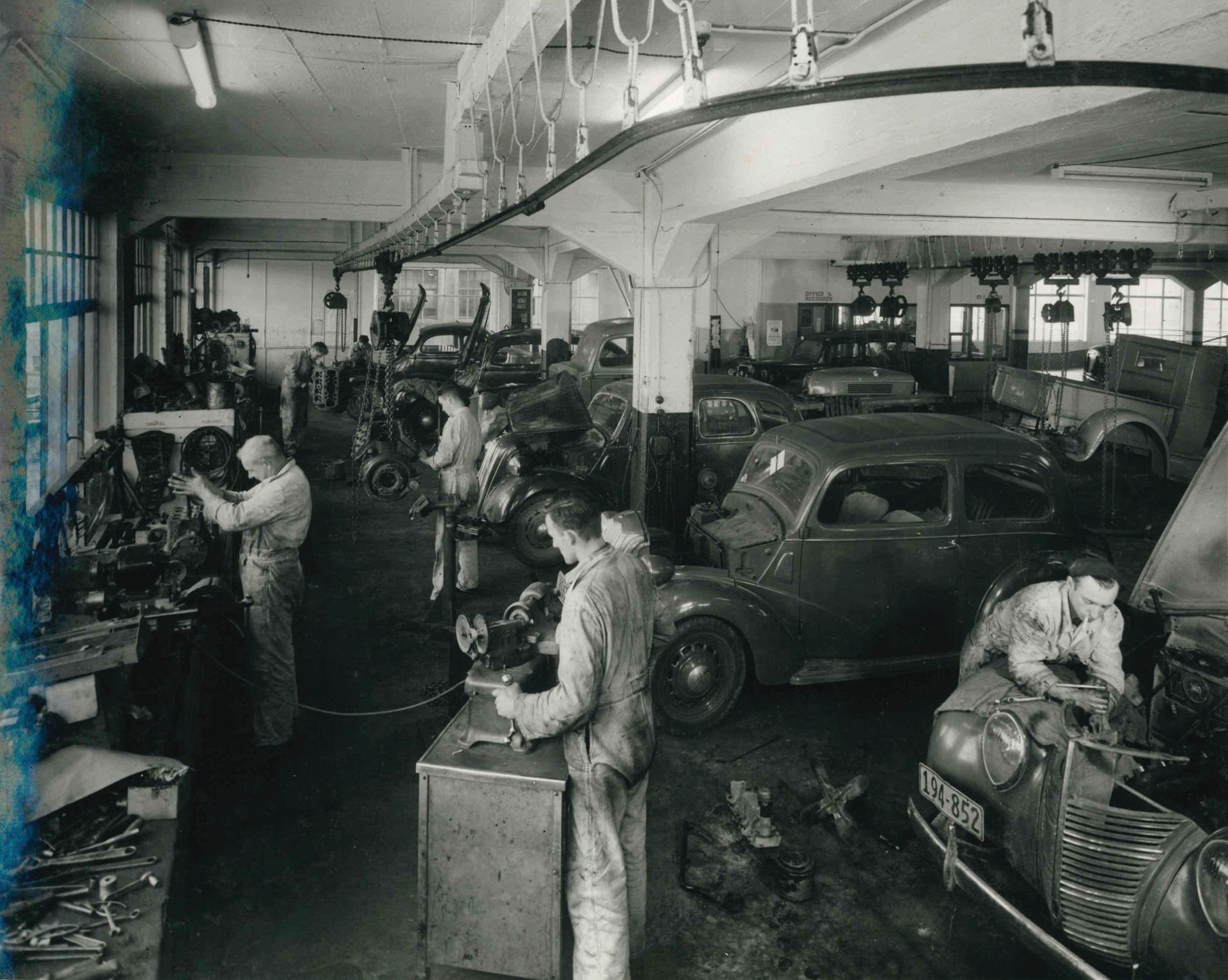
When the businesses merged, the Universal Building on Symonds Street became the administration centre, sales and service centre for new and second-hand cars. The John W Andrew building on the corner of Porters Avenue and New North Road became the service and sales centre for commercial vehicles.
The new company was called John W Andrew & Sons Ltd. And John W Andrew later bought the building in Symonds Street from the Colonial Motor Company.
"When the new Model A Ford arrived, it was so popular that they never once had to advertise, but there was no demand for the Model T," says Birchall. "By 1930, they had so many Model T Fords in the yard that they could not sell, they had staff breaking them up for scrap."
There was a wrecker, Auto Parts, at the top of Newton Road, which was one of 14 throughout the country founded by the Tidswell brothers. Joe Tidswell controlled the North Island yards and became known to save old cars, though he wrecked two in Auckland that he later said he should have tried to save: 1906 Rolls Royce that was driven into the yard, and a 1907 6-Cylinder Model K Ford. The latter had been brought into New Zealand for the Christchurch Exhibition and was found under a house in Remuera.
He had tried to pass the vehicle on to John W Andrew & Sons, but they did not want it because only one model of those cars had come into the country and it was very hard to sell the parts.
Another character in the motoring scene around this time was William (Bill) Stanley Miller who had quite the resumé. He was an adventurer, inventor, aviator, motor engineer, garage owner, petrol importer, entrepreneur, pioneer, saw-miller, miner, businessman and farmer.
In 1916, Miller moved his motor repair business to 180 Symonds Street, then when he needed more space, he purchased the 11,000 square feet old Royal Skating Rink site on the corner of Khyber Pass and Burleigh Street. He was the first in Auckland to sell second-hand vehicles in big numbers. In 1919 the building was further extended, and he started selling the Autocar truck.
By 1921, Miller had sub-agencies for Mercury, Lancia, Chandler, Calcott, Cleveland, Dort, Pierce Arrow, Napier and Autocar, though the Chandler was the only one he promoted. "He made the newspapers when he bet a friend he could shoot 200 rabbits in two hours in one night, using the headlights of the Chandler on One Tree Hill. He shot 220 rabbits in one hour forty-five minutes and won the bet," says Birchall.
Miller also provided long-term storage for motor cars and would paint and polish the vehicle while the owner was away. By 1928, he had a 60-page catalogue of parts they sold and employed 28 staff at Khyber Pass.
"Bill Miller sold a lot of cars over the years as he was one of the first in Auckland to have a second car yard. The two cars he sold most of were Chandler then later Nash," he says.
Miller was one of the first to establish a car wrecking business in the city. He also began importing petrol in the 1920s and "ran foul with Auckland Council over storage of petrol at Khyber Pass", so he purchased a block of land elsewhere for this purpose.
He was also one of the first to mechanise petrol pumps using compressed air. His garage at Khyber Pass had the Auckland agency for Penzoil products and the road outside had been sealed, so Miller decided to add his own touch by painting on the seal where cars should and should not park, an act that did not amuse the Council, says Birchall. "It was in the days before lines were painted on roads."
Copies of Barry Birchall's book The Early Years of the Motor Vehicle in Auckland, $40 plus postage, can be ordered from barrybirchall@xtra.co.nz