
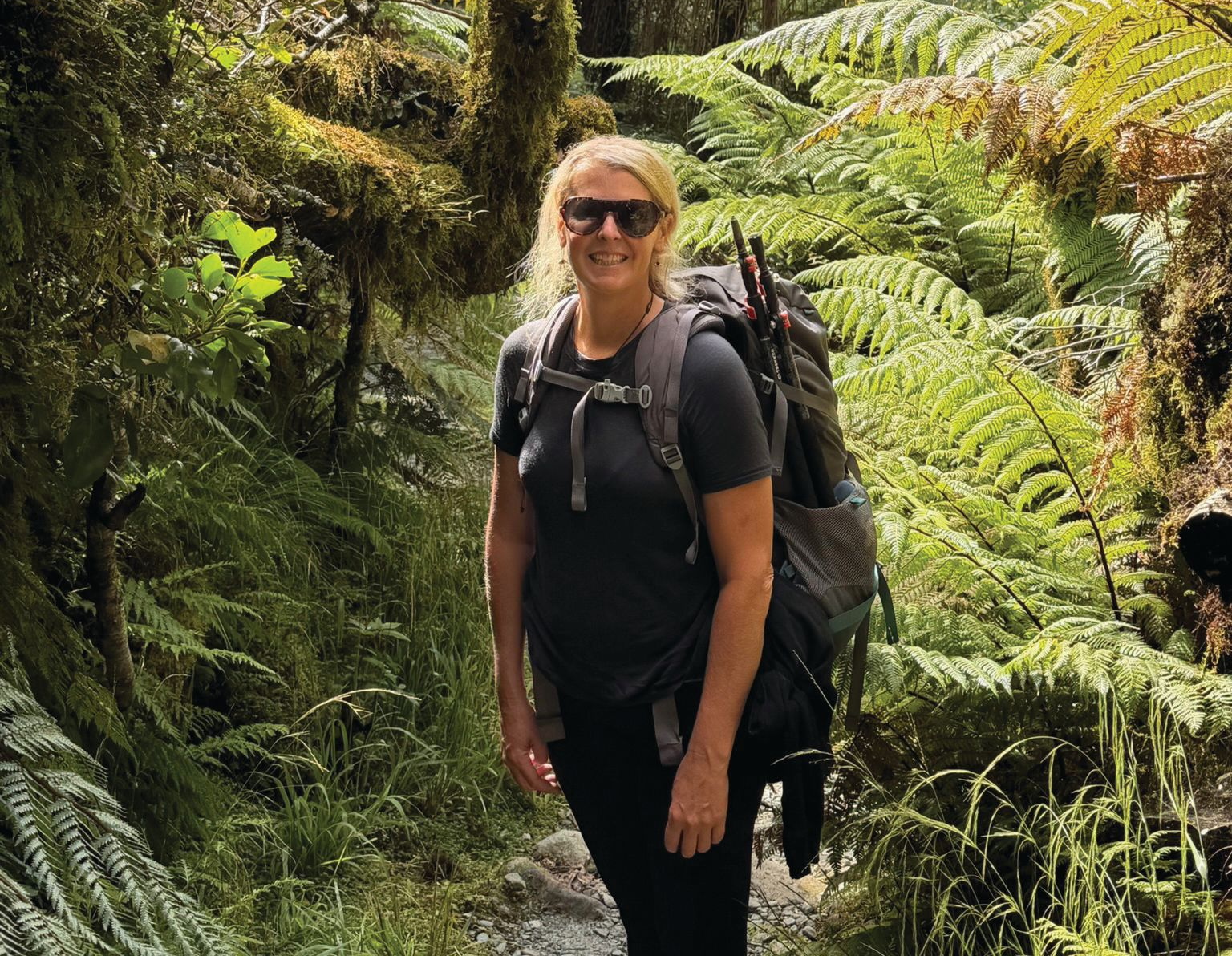
Stephanie Vercoe: Greening Aotearoa, one volunteer at a time
Conservation Volunteers New Zealand
Words: Suzanne McNamara
Photography:
Suzanne McNamara
One of my companions was Stephanie (Steph) Vercoe, newly appointed CEO of Conservation Volunteers New Zealand (CVNZ), an Uptown-based organisation connecting people to nature through hands-on conservation work.
It didn't take long for our conversations to turn to the state of New Zealand's environment - and the role people, communities, businesses and the government play in protecting it.
"For most people, once they experience nature properly, they start to value it," Steph says. "And once you value it, you want to protect it."
On a track famed for its birdsong, the silence was striking. We saw just two kea - the world's only alpine parrot - across four days. Once abundant, their absence was hard to ignore.
So are we actually making progress? Or are we clinging to slogans?
The Predator Free 2050 initiative (shut down by the current government and rolled into DOC's responsibilities), as described by the Department of Conservation, is "working towards" eradicating key predators. It's careful language - and not especially reassuring. Steph sees it differently.
"We have to have a bold vision," she says. "Most of our exports rely on nature. Our tourism relies on nature. If we don't aim high, we just maintain the status quo."
Or worse- go backwards.
"We have to get to predator-free. Otherwise we've got a real issue in this country. This is as much about business and brand as it is about conservation."
That tension sits at the heart of the challenge. New Zealand's clean, green reputation masks a more complex reality: the draining of wetlands, polluted waterways, and the unintended consequences of large-scale pine planting for carbon offsets. The scale of the problem demands all of our attention.
"Legislation that make businesses accountable for their impacts on nature is critical," Steph says. "It forces change through the supply chain. Otherwise, sustainability just becomes a 'nice to have"."
Reversing biodiversity loss, she argues, requires a fundamental shift.
"Conservation alone will only flatten the curve. To actually restore nature, business production has to change - and consumption has to slow down."
It's a daunting prospect that takes everyone's goodwill to happen. Which is why, she says, community action matters.
Steph points to a recent project in Otautahi Christchurch, where CVNZ is working with the council and local communities to transform red zone land into a green urban forest.
"For a place that experienced such devastation, to see the community lead that regeneration is incredibly powerful."
That connection - between people and place, is central to CVNZ's work. Programmes range from engaging with councils, mana whenua and landowners, to supporting new migrants in understanding New Zealand's natural environment and creating employment pathways into conservation for people on the Jobseeker Support benefit.
Businesses, too, are part of the equation. CVNZ runs corporate volunteering days, lowering the barrier for organisations to turn sustainability commitments into action.
For those ready to move beyond conversation, CVNZ makes it easy to get involved. Volunteer days run year-round - from inner- city planting to coastal restoration - many close enough to fit into a morning. Individuals can join existing projects, while businesses can turn sustainability talk into action with organised team days.
But one of the more complex ideas we return to on the track is "natural capital".
For too long, Steph explains, nature has been treated as a free resource-extracted but not valued.
"There's a global movement to properly account for nature," she says. "If your business depends on it, you should be investing in it." The logic is simple: if nature carries value, it will be better protected.
By the time we finish the track - and in a place defined by its natural beauty, the stakes of not pushing harder on conservation are harder to ignore.
Such is the effect of the power of nature - and walking and talking out in the wild.
To get involved, head to the CVNZ website and click the Volunteer button. All the options and events are listed there.
Conservation Volunteers New Zealand
Level 2, Dalmatian Cultural Society Building 10 New North Road
Phone: 0800 567 686
Email: info@cvnz.org.nz
Website: conservationvolunteers.co.nz
Instagram: @conservationvolunteersnz